

How India Launched a Space Program at $107 Per Capita GDP
The story of the global space race, for the better part of the last 70 years, has been a monologue delivered by the western hemisphere. It is a story dominated by the reuse of boosters in Florida, the colonization of Mars as a Silicon Valley startup pitch, and the consolidation of low-Earth orbit connectivity by mega-constellations. But while the world looked West, a quiet, seismic shift was occurring in the East. In 2025, the narrative is no longer a monologue. It is a dialogue, and the counterpoint is being delivered by the Indian Space Research Organisation (ISRO).
We often describe space agencies by their defining characteristic. NASA is the agency of Scale. SpaceX is the agency of Disruption. Roscosmos is the agency of Legacy. For decades, ISRO was the agency of Frugality—famous for sending an orbiter to Mars for less than the budget of the film Gravity. But 2025 has revealed a new truth: Frugality was merely the seed, the tattva. The entity that has emerged is something far more formidable.
ISRO has become the Agency of Ambition.
This report dissects that transformation. I am not merely looking at launch logs or budget sheets. I am observing a systemic overhaul of how a nation interacts with the cosmos. We will explore how ISRO transformed a shoestring budget into a high-margin commercial engine via NewSpace India Limited (NSIL). We will decode the physics behind the cost-efficiencies that baffle western analysts. We will trace the invisible data cables that run from satellites in geostationary orbit directly to the mobile phones of illiterate fishermen in Kerala, generating millions in economic value. And we will look at the future—a future of methane-powered heavy lifters, sovereign space stations, and a private sector that is manufacturing rockets with the speed of consumer electronics.
The data from 2025 suggests that ISRO and India are no longer satisfied with merely participating in the space economy. They intend to anchor it.
But to understand where ISRO is going from here on, one must understand the gravitational forces that shaped its past.
When researching this post, I arrived at an interesting, perhaps previously unpublished fact: India was the poorest nation in history to successfully launch a sustainable national space program.
Take a look at the table below. For me, nothing underlines ISRO’s (and India’s) sheer audacity and yearning for the stars more than this fact - India had the lowest GDP for any nation at the time of the launch of their respective space programs! USSR had Sputnik; India had spunk.

But how am I defining success? I dug a little more and added another column to the table above, with a simple metric - number of rocket launches since inception. Here’s the data:

With 104 launches since 1969, ISRO leaves the French and the British programs in the dust, and competes with JAXA (erstwhile NASDA).
The USA and USSR were in the middle of a space race, justifying their rocket launch numbers. A couple of notes:
The USA’s per capita income when it founded NASA ($2,700) was 25 times higher than India’s when it founded ISRO ($107).
The US and USSR spent 2-4% of their massive GDPs on space during the peak race.
India spent a fraction of 1% of a much smaller GDP.
Beyond the money, the establishment of ISRO for a country finding its feet was not just a milestone, but an insightful peek into the country’s psyche. It speaks volumes of India’s ambitions, spirit and pluck, it’s ability to dream and dare, and suggests that her locus of identity remained internal even after two hundred years of trauma.
But work remained, and it was hard and long. Let’s see how India tackled and continues to tackle the hard reality of delta-v.
The Delta-v Secret: Why ISRO’s Rockets Cost Less
1.1 The Tyranny of the Rocket Equation
The popular media narrative focuses on “low cost,” often attributing it to cheaper labor arbitrage in India. While labor costs play a role, the true source of ISRO’s efficiency is physics, not payroll. It is a philosophy of energy management—specifically, the obsession with the Delta-v budget.
In astrodynamics, Delta-v (Δv) is the measure of the impulse required to perform a maneuver.1 It is the currency of spaceflight. Every kilogram of fuel you carry to change your velocity requires more fuel to lift that fuel. This is the tyranny of the Tsiolkovsky rocket equation.
Western methodologies, flush with Cold War budgets, often solved Delta-v problems with brute force: bigger rockets, more fuel, direct trajectories. ISRO, operating under post-nuclear testing sanctions and limited budgets, could not afford brute force. They had to afford geometry. But science, just like art, thrives under limitations.
1.2 The Gravity Assist: Stealing Momentum
The architectural blueprint of ISRO’s interplanetary success, from the Mars Orbiter Mission (MOM) to the recent operationalization of Aditya-L1, relies heavily on Gravity Assists.
A gravity assist is an orbital maneuver that uses the relative motion and gravity of a planet or other celestial body to alter the path and speed of a spacecraft.2 When a spacecraft flies close to a planet, it falls into it’s gravity well, gaining speed. If it approaches from behind the planet’s orbital path, it steals a tiny fraction of the planet’s orbital momentum. The planet slows down imperceptibly; the spacecraft speeds up significantly.
When ISRO launched MOM, it did not have a rocket powerful enough to send the probe on a direct Trans-Mars Injection (TMI). A direct launch to Mars requires a massive Delta-v injection at Earth departure. Instead, ISRO placed the craft in an elliptical parking orbit around Earth. Over several weeks, they fired the small onboard engines at the perigee (the closest point to Earth).
Why perigee? Because of the Oberth Effect. Rocket engines are more efficient at high speeds. By burning fuel when the spacecraft was moving fastest (at the bottom of Earth’s gravity well), ISRO maximized the kinetic energy gain.1 They slowly raised the apogee (the farthest point) until the spacecraft broke free of Earth’s sphere of influence, precisely timed to intercept Mars. Smartly trading time for fuel, this method took longer, but it cost a fraction of a direct launch.1
1.3 Aditya-L1: Orbital Ballet
This mastery of orbital mechanics culminated in the operational success of the Aditya-L1 solar observatory in 2025. Launched in late 2023, the spacecraft reached its destination—the Sun-Earth Lagrange Point 1 (L1)—in early 2024, but the scientific harvest and orbital stability data solidified in 2025.3
The L1 Halo Orbit:
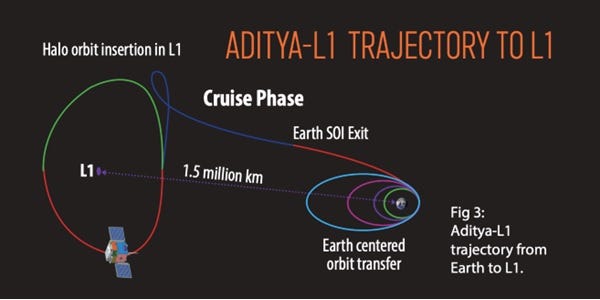
The L1 point is a gravitational sweet spot 1.5 million kilometers from Earth where the gravitational pull of the Sun and Earth cancel out. However, L1 is an unstable equilibrium; like a ball balanced on a peak, any drift causes the spacecraft to fall away. To maintain position, ISRO did not park the satellite at L1. They inserted it into a Halo Orbit around L1.5.
This insertion maneuver, conducted on January 6, 2024, was a high-stakes braking operation. The spacecraft, traveling at cruise velocity, had to fire thrusters to nullify its X and Z velocity components while achieving a precise Y-velocity to “fall” into the Halo orbit.3
But Why a Halo Orbit?
Unobstructed View: A satellite in a Halo orbit avoids the Earth-Sun line of sight, preventing solar radio interference from Earth’s atmosphere and ensuring continuous solar viewing without eclipses.4
Fuel Efficiency: The specific dimensions of the orbit were calculated to minimize station-keeping maneuvers. In 2025, data showed that the fuel consumption for maintaining this orbit was significantly lower than projected, extending the mission life beyond the baseline of 5 years!3
This once again proved that frugality requires constant innovation, jugaad, and daring. It is not just about using cheaper materials; it is about using higher mathematics to reduce the physical demands on the hardware. By navigating the manifolds—the gravitational highways of the solar system—ISRO achieves with a PSLV (Polar Satellite Launch Vehicle) what others might require a heavy-lift vehicle to accomplish.
1.4 Chandrayaan-3: What the Hop Experiment Proves
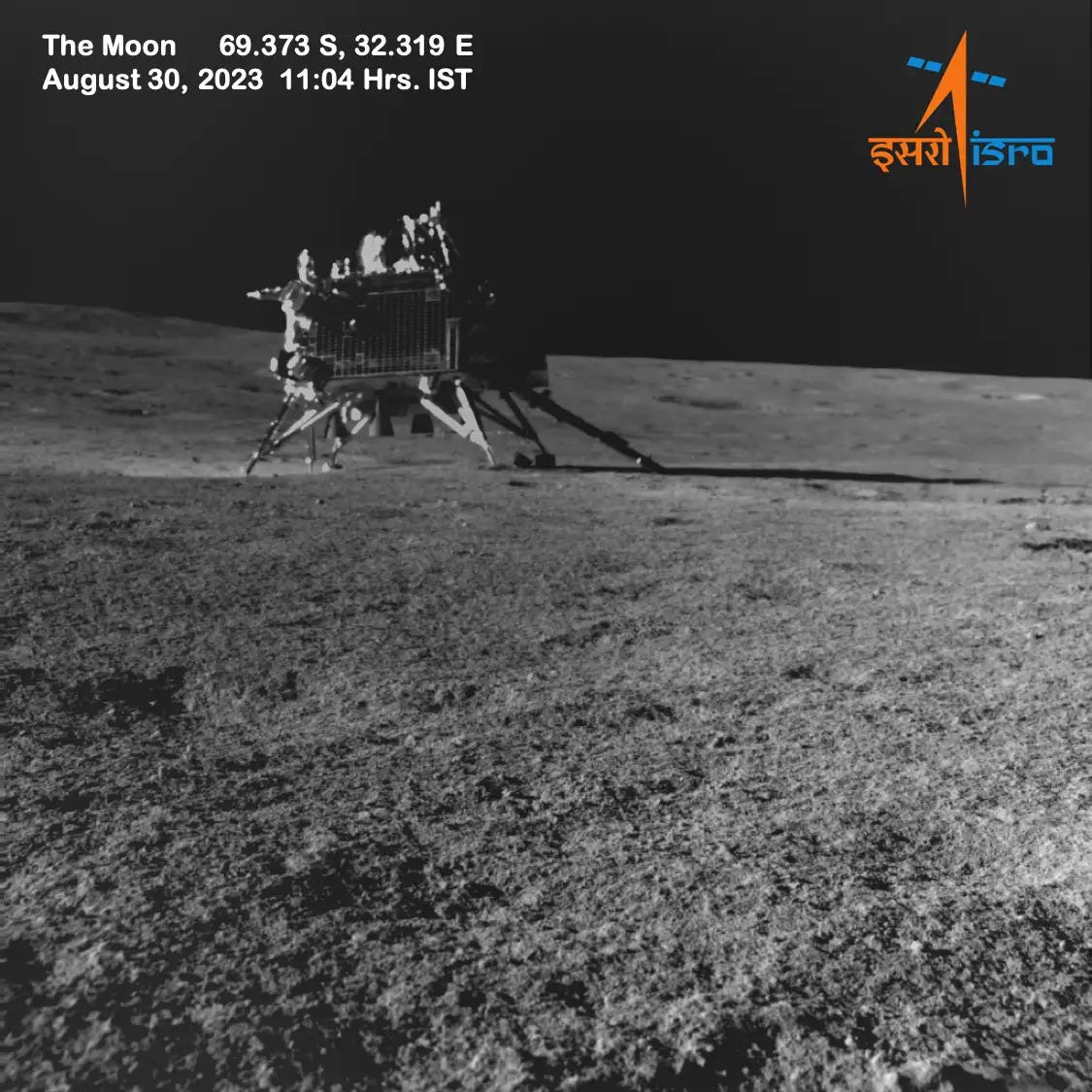
On 23rd August 2023, the Chandrayaan-3 mission landed safely and softly on the Lunar surface, making India not just the fourth nation to land on the moon, but the first to land on the coveted, mineral-rich south pole. This already completed the mission, but ISRO wanted more.
ISRO conducted two specific experiments to move the Chandrayaan program beyond one-way trips:
The Hop Experiment: The Vikram lander fired its engines to lift 40 cm off the lunar surface and land again. This seemingly small “hop” verified the capability to re-ignite engines in the harsh lunar environment, a precursor for the sample return mission (Chandrayaan-4).7
Propulsion Module Return: The module that carried the lander had 100 kg of excess fuel due to a precise launch injection. ISRO repurposed this to fly the module back from the Moon to a high Earth orbit.8
This unannounced maneuver demonstrated a crucial capability: Trans-Earth Injection (TEI). ISRO has effectively flight-tested the return leg of a sample return mission without launching a dedicated mission for it. Not satisfied with the already record-breaking mission, ISRO squeezed a technology demonstrator out of the fuel margins of the primary mission, further engraving the essence of ISRO’s operational philosophy.
Chapter 2: The Commercial Heavyweight – NSIL and the LVM3
For decades, ISRO was a state-funded research entity. Its “customers” were other government departments—telecom, meteorology, defense. The creation of NewSpace India Limited (NSIL) in 2019 signaled a break from this tradition. By 2025, NSIL has transformed ISRO’s assets into commercial products, and the numbers are staggering.
2.1 The 2025 Financial Breakout
In Fiscal Year 2025 (FY25), NSIL reported a revenue of ₹3,026.09 crore (approx. $360 million). This is a 43% increase from the previous year.9 Even more impressively, the Profit Before Tax (PBT) grew by 54% to ₹1,242.12 crore.9
This is not the financial profile of a subsidized government wing; it is the profile of a high-growth aerospace company. The growth is driven by a strategic pivot: ISRO has stopped selling “excess capacity” and started selling “dedicated capacity.”
The Demand-Driven Model:
Historically, ISRO launched satellites and then leased transponders. NSIL flipped this. Missions are now Demand-Driven. The user pays upfront, and ISRO builds the specific asset required. The GSAT-24 mission, fully funded by Tata Play, proved this model works.
2.2 The LVM3 Commercial Surge
The primary weapon in NSIL’s arsenal is the LVM3 (Launch Vehicle Mark-3). Known as “Bahubali”, this rocket was designed for India’s human spaceflight and heavy geostationary satellites. But it has now been transformed into a global commercial workhorse.
The BlueBird Block-2 Mission (December 2025):
On December 24, 2025, the LVM3-M6 mission lifted off from Sriharikota carrying the BlueBird Block-2 satellite for AST SpaceMobile.11
Payload Mass: ~6,100 kg. This was the heaviest commercial payload ever launched from Indian soil.13
The Client: AST SpaceMobile is a US-based company building a space-based cellular broadband network. They chose ISRO over SpaceX.
The Logic: Why did a US company bypass the Falcon 9? The answer lies in Schedule Assurance. SpaceX’s manifest is crowded with its own Starlink launches and NASA mandates. For a commercial operator, a delay of six months can cost millions in lost revenue. ISRO offered a dedicated slot and a reliable vehicle.11
2.3 The Economics of Launch: LVM3 vs. Falcon 9
The global launch market is a duopoly of capability, but a monopoly of price. SpaceX sets the floor. How does ISRO compete?
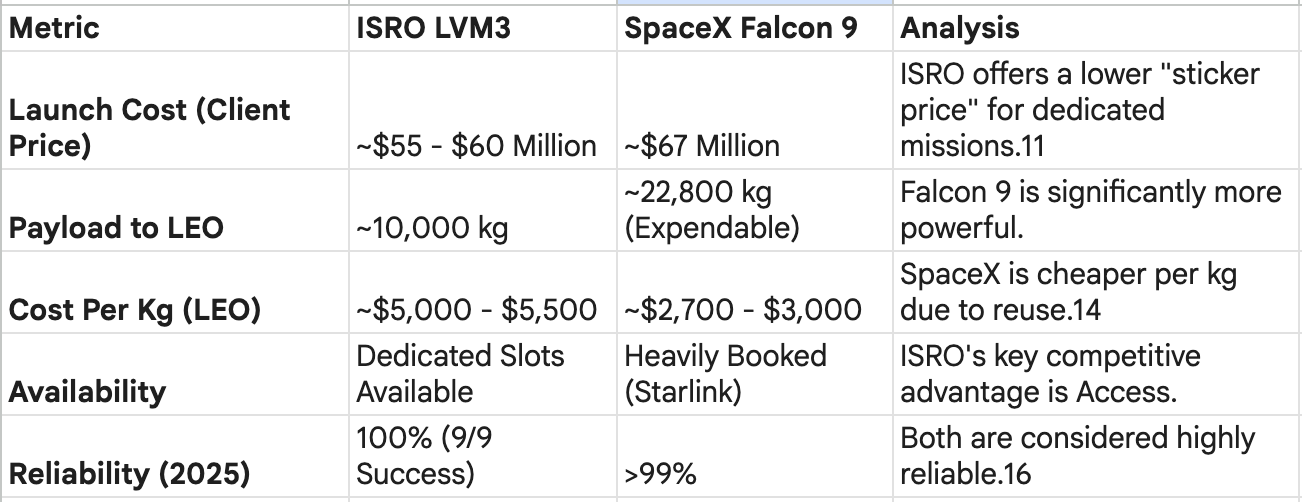
The data in Table 2.1 reveals ISRO’s vulnerability. While the total mission cost ($60M) is competitive, the efficiency (Cost/kg) lags behind SpaceX because the LVM3 is an expendable rocket. Every launch throws away hardware worth millions into the Bay of Bengal. SpaceX lands its boosters.
To survive in the long term, ISRO knows it cannot rely on expendable rockets. The “frugality” of the past—saving money by not developing expensive reusable tech—has become a liability in the era of reusable rockets.
This realization birthed the NGLV (more about NGLV in Part 2).
2.4 Industrializing the PSLV
NSIL is not just selling launches; it is privatizing production. In 2025, the PSLV (Polar Satellite Launch Vehicle), ISRO’s workhorse, entered a new phase. A consortium led by Hindustan Aeronautics Limited (HAL) and L&T was awarded a contract to manufacture five PSLVs end-to-end.9
This move shifts the responsibility of building and integrating rockets to the industry players. ISRO simply presses the ‘launch’ button. The goal with this strategic move is to increase ISRO’s launch cadence from 2-3 per year to 10+, and cater to the small-satellite market that demands frequency over massive payloads.
Chapter 3: Space 2.0 – The Privateers
If Chapter 2 was about the privatization of the state’s giants, Chapter 3 is about the rise of the startups. The reforms of 2020-2023, which opened the space sector to private players (Non-Governmental Entities or NGEs), bore fruit in 2025. We are seeing the emergence of a “Space 2.0” ecosystem in India, centered in Hyderabad (Skyroot) and Chennai (Agnikul).
3.1 Skyroot Aerospace: Vikram-1
Skyroot Aerospace captured headlines in 2022 with India’s first private suborbital launch (Vikram-S). In late 2025, they moved to the main stage.
The Infinity Campus:
In November 2025, Prime Minister Modi inaugurated Skyroot’s Infinity Campus in Hyderabad. This is India’s first private rocket factory.17
Scale: 60,000 sq. ft. facility designed to produce one rocket per month.
Tech: It houses the largest carbon-fiber winding machine in India. The Vikram-1 rocket is built with an all-carbon-composite structure, making it lighter and more efficient than ISRO’s metallic sounding rockets.17
Vikram-1 Status:
As of December 2025, the flight-model of Vikram-1 has been transported to the Satish Dhawan Space Centre (SDSC) for integration.19
Mission Profile: The maiden orbital launch is targeted for Q1 2026.
Risk Management: The first flight will carry only ~25% of its payload capacity to de-risk the mission.19
Target Market: The small satellite (<500 kg) market, competing directly with Rocket Lab’s Electron. Skyroot targets a price point of ~$10-15 million per launch, undercutting US competitors.17
3.2 Agnikul Cosmos: The 3D Printed Rocket
While Skyroot focuses on composites, Agnikul Cosmos focuses on additive manufacturing (3D printing). Their vehicle, Agnibaan, is a technological marvel of integration.

The Agnilet Engine:
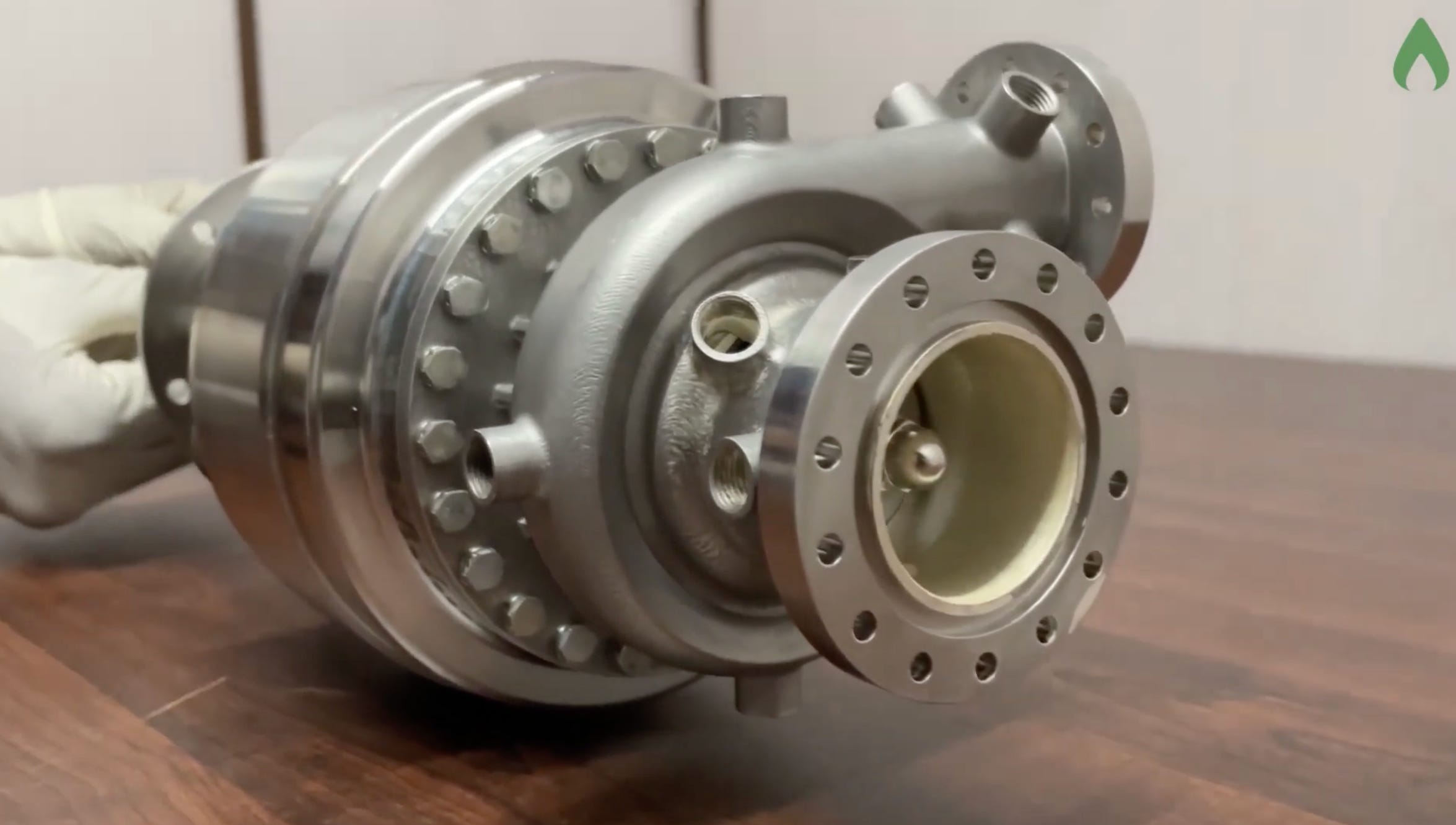
Agnikul uses the Agnilet, the world’s first single-piece 3D-printed semi-cryogenic engine. In a traditional rocket engine, thousands of parts (pipes, valves, injectors) are welded together. Each weld is a potential failure point. Agnikul prints the entire engine in one shot.
2025 Milestone: In May 2025, they successfully test-fired a cluster of these engines.20
Electric Pumps: Unlike ISRO’s massive turbopumps which use gas generators, Agnikul uses electric motors to pump fuel. This is akin to moving from a combustion engine to an EV motor—simpler, easier to control, and easier to manufacture.20
Mobile Launch:
Agnikul operates India’s first private launchpad, “Dhanush,” at Sriharikota. But their design philosophy allows for mobile launch capability—theoretically, they could launch from a container truck, giving them immense strategic flexibility.21
3.3 The Ecosystem Effect
The growth of these companies changes the very structure of the Indian space economy.
Foreign Direct Investment (FDI): The 2024 amendment to the FDI policy allowed 100% automatic route for component manufacturing.22 This has opened the floodgates for global venture capital to enter Indian space tech.
Startup Density: The number of space startups surged from 54 in 2020 to over 200 in 2025.22
Impact: ISRO is no longer the sole employer of aerospace talent. A fresh graduate in 2025 is as likely to join a startup in Hyderabad as they are to join VSSC in Thiruvananthapuram.
The achievements and ambitions of ISRO are too massive to contain into a single post. I will follow up this deep dive soon with a part 2, where we will discuss ISRO’s impact on the socio-economics of India and its citizens; its ambitions for human spaceflight, and discuss some of the most exciting projects launching in the near-future. Please subscribe to The Polymathic Pursuit to be informed when the post lands. And if reading this post made you proud of India and ISRO, please share with friends and family.
Works cited
Delta-v budget - Wikipedia, accessed December 27, 2025, https://en.wikipedia.org/wiki/Delta-v_budget
Gravity assists | Spaceflight Simulator Wiki - Fandom, accessed December 27, 2025, https://spaceflight-simulator.fandom.com/wiki/Gravity_assists
Halo-Orbit Insertion of Aditya-L1 Successfully Accomplished - ISRO, accessed December 27, 2025, https://www.isro.gov.in/halo-orbit-insertion-adtya-l1.html
ADITYA-L1 - ISRO, accessed December 27, 2025, https://www.isro.gov.in/Aditya_L1.html
Aditya-L1 - Wikipedia, accessed December 27, 2025, https://en.wikipedia.org/wiki/Aditya-L1
Aditya L-1 Mission - PMF IAS, accessed December 27, 2025, https://www.pmfias.com/aditya-l-1-mission-2/
How we built sensors for Chandrayaan-3 to navigate and land on the Moon, accessed December 27, 2025, https://wimwian.iima.ac.in/building-chandrayaan-sensors/
Returns to home Earth: Chandrayaan-3 Propulsion Module moved from Lunar orbit to Earth’s orbit - ISRO, accessed December 27, 2025, https://www.isro.gov.in/Ch3_Propulsion_Module_moved_from_Lunar_orbit_to_Earth_orbit.html
ISRO’s commercial arm NSIL reports 43% revenue growth in FY25 ..., accessed December 27, 2025, https://telecom.economictimes.indiatimes.com/news/portal-in-portal/satcom/isros-commercial-arm-nsil-reports-43-revenue-growth-in-fy25/119569950
New Space India Limited (NSIL): Driving India’s Space Economy - Nimbus IAS Academy, accessed December 27, 2025, https://www.nimbusias.com/new-space-india-limited-nsil/
Bluebird Block-2 launch: India’s heavy-lift moment is beyond space - Northlines, accessed December 27, 2025, https://thenorthlines.com/bluebird-block-2-launch-indias-heavy-lift-moment-is-beyond-space/
India’s LVM3 ‘Baahubali’ Marks ISRO’s Largest Commercial Mission With 6,100 kg Satellite, accessed December 27, 2025, https://www.indianweb2.com/2025/12/indias-lvm3-baahubali-marks-isros.html
Isro’s LVM3 rocket places US communication satellite into low earth orbit, accessed December 27, 2025, https://www.business-standard.com/india-news/isro-s-rocket-with-us-communication-satellite-bluebird-block-2-lifts-off-125122400147_1.html
SpaceArc: Revolutionizing India’s Cosmic Frontier through Reusable Rockets, Black Hole Dynamics, and Relativistic AI Control - viXra.org, accessed December 27, 2025, https://vixra.org/pdf/2505.0147v1.pdf
Rosy Ruma(@rosyruma)’s insights, accessed December 27, 2025, https://www.binance.com/en/square/post/34184149411154
LVM3 - Wikipedia, accessed December 27, 2025, https://en.wikipedia.org/wiki/LVM3
Vikram-I Rocket: India’s First Private Orbital Launch Vehicle by Skyroot Aerospace - StudyIQ, accessed December 27, 2025, https://www.studyiq.com/articles/vikram-i/
PM flags off Skyroot’s Infinity campus in Hyderabad, unveils India’s 1st private commercial rocket Vikram-1, accessed December 27, 2025, https://timesofindia.indiatimes.com/business/india-business/pm-modi-unveils-indias-first-commercial-private-rocket-vikram-1-inaugurates-skyroots-new-infinity-campus/articleshow/125607522.cms
Skyroot’s Vikram-1 launch vehicle has already reached SDSC-SHAR, where integration and assembly are currently underway. : r/ISRO - Reddit, accessed December 27, 2025, https://www.reddit.com/r/ISRO/comments/1pm88v7/skyroots_vikram1_launch_vehicle_has_already/
Agnikul Cosmos successfully test fires engine to power Agnibaan rocket - India Today, accessed December 27, 2025, https://www.indiatoday.in/science/story/agnikul-cosmos-successfully-test-fires-engine-to-power-agnibaan-rocket-2729543-2025-05-23
Spacetech Company Agnikul Cosmos to Commercialize in 2025 | Built In Chennai, accessed December 27, 2025, https://builtinchennai.in/articles/agnikul-cosmos-plans-2025-launch-20241030
Impact of Space Missions on Indian Economy - Drishti IAS, accessed December 27, 2025, https://www.drishtiias.com/daily-updates/daily-news-analysis/impact-of-space-missions-on-indian-economy
Potential Fishing Zone (PFZ) Advisory - incois, accessed December 27, 2025, https://incois.gov.in/MarineFisheries/PfzAdvisory
Benefits derived by the fisherman using Potential Fishing Zone (PFZ) advisories, accessed December 27, 2025, https://www.researchgate.net/publication/233996059_Benefits_derived_by_the_fisherman_using_Potential_Fishing_Zone_PFZ_advisories
Operational oceanographic services for the growth of blue economy in India, accessed December 27, 2025, https://services.incois.gov.in/documents/ResearchPapers/RP672.pdf
Indian National Centre for Ocean information Services (INCOIS) Ministry of Earth Sciences, Govt of India Hyderabad - Geospatial World, accessed December 27, 2025, https://geospatialworld.net/gwf/presentations/hydro-summit/S2/GWF2024-Blue-Economy-Development-National-Regional-Global-strategies-India-TNC_Karthik.pdf
Insurers Turn to Satellites for Damage Assessment - Esri, accessed December 27, 2025, https://www.esri.com/about/newsroom/publications/wherenext/insurers-use-satellite-imagery-for-damage-assessment
ISRO and Space Technology in Indian Agriculture: Transforming Crop Forecasting, Insurance, and Decision-Making, accessed December 27, 2025, https://www.global-agriculture.com/india-region/isro-and-space-technology-in-indian-agriculture-transforming-crop-forecasting-insurance-and-decision-making/
PM’s Fasal Bima Yojana – Bounty for Insurance Companies, Frugality for Farmers....by KBS Sidhu - Babushahi News, accessed December 27, 2025, https://www.babushahi.com/opinion.php?oid=2039&headline=PM%E2%80%99s-Fasal-Bima-Yojana-%E2%80%93-Bounty-for-Insurance-Companies,-Frugality-for-Farmers....by-KBS-Sidhu
Cyclone Biparjoy: Triumph of Zero Casualty in Gujarat - NIDM, accessed December 27, 2025, https://nidm.gov.in/PDF/pubs/CYCLONE_BIPARJOY_NIDM24.pdf
ISRO’s GSLV-F16 will launch ISRO-NASA joint satellite, NISAR, on July 30, 2025, accessed December 27, 2025, https://www.isro.gov.in/Mission_GSLVF16_NISAR.html
ISRO-NASA radar to offer a closer look at Earth’s changing landscapes - Mongabay-India, accessed December 27, 2025, https://india.mongabay.com/2025/11/isro-nasa-radar-to-offer-a-closer-look-at-earths-changing-landscapes/
Isro says 90% of Gaganyaan Mission complete, crewed launch by 2027 - India Today, accessed December 27, 2025, https://www.indiatoday.in/science/story/isro-says-90-of-gaganyaan-mission-complete-crewed-launch-by-2027-2807285-2025-10-23
90% of Gaganyaan development work done: ISRO chief - The Hindu, accessed December 27, 2025, https://www.thehindu.com/sci-tech/science/gaganyaan-mission-90-of-development-work-completed-says-isro-chairman/article70193224.ece
Gaganyaan-1 - Wikipedia, accessed December 27, 2025, https://en.wikipedia.org/wiki/Gaganyaan-1
Gaganyaan - Wikipedia, accessed December 27, 2025, https://en.wikipedia.org/wiki/Gaganyaan
parliament question: indian indigenous space station - Press Information Bureau, accessed December 27, 2025, https://www.pib.gov.in/PressReleasePage.aspx?PRID=2198267®=3&lang=2
Bharatiya Antariksh Station - Wikipedia, accessed December 27, 2025, https://en.wikipedia.org/wiki/Bharatiya_Antariksh_Station
Next Generation Launch Vehicle - Wikipedia, accessed December 27, 2025, https://en.wikipedia.org/wiki/Next_Generation_Launch_Vehicle
ISRO Launches ‘Soorya’: The Future of Next-Gen Space Exploration - Times of India, accessed December 27, 2025, https://timesofindia.indiatimes.com/city/thiruvananthapuram/isro-begins-work-on-next-gen-launch-vehicle-soorya-for-future-space-missions/articleshow/118625360.cms
NGLV Configuration Completed, Design Under Process, First Stage Could Be Reused 15 To 20 Times | Indian Defence News, accessed December 27, 2025, https://www.indiandefensenews.in/2025/01/nglv-configuration-completed-design.html
What Makes Chandrayaan-3 Different From Chandrayaan-2 - ScienceIndiamag, accessed December 27, 2025, https://scienceindiamag.in/what-makes-chandrayaan-3-different-from-chandrayaan-2/
parliament question: indian space programme’s vision and challenges - Press Release: Press Information Bureau, accessed December 27, 2025, https://www.pib.gov.in/PressReleseDetail.aspx?PRID=2205840®=3&lang=1