

Welcome to this week’s edition of +ND+A! As autumn deepens, India’s clean energy trajectory surges forward with record-breaking achievements. From solar installations crossing new thresholds to green hydrogen conferences catalyzing global partnerships, November’s second week showcases the nation’s relentless drive toward a sustainable, technologically advanced future.
Energy & Green Transition
Green Hydrogen Takes Center Stage at ICGH 2025
On the eve of cutting power sector emissions by 24 million tonnes of CO₂, the Ministry of New and Renewable Energy hosted the 3rd International Conference on Green Hydrogen (ICGH 2025) at Bharat Mandapam from November 11-12, bringing together global policymakers, scientists, and industry leaders to chart India’s hydrogen roadmap. Union Minister Shripad Naik announced that India is on track to command 10% of global green hydrogen demand by 2030, with projects approved for 862,000 tonnes per annum of green hydrogen production and 3,000 MW of electrolyzer manufacturing capacity. The government has allocated ₹17,000 crore in incentives, positioning India as a key pillar of the global hydrogen value chain.
SECI and Andhra Pradesh Partner on Major Storage Project
Solar Energy Corporation of India (SECI) and the Government of Andhra Pradesh exchanged Government Orders for a 1,200 MWh Battery Energy Storage System (BESS) at Nandyal and a 50 MW Hybrid Solar Project during the Andhra Pradesh Partnership Summit in Visakhapatnam. These initiatives, developed under CAPEX mode with SECI taking full responsibility for investment and implementation, represent a major leap in clean energy storage capacity and will strengthen India’s transition to a more resilient, storage-enabled green grid.
ReNew Energy Commits $9.33 Billion to Green Projects
Renewable energy major ReNew signed agreements to invest $9.33 billion in green energy projects in southern India, demonstrating sustained private sector confidence in India’s clean energy transition. Additionally, the Asian Development Bank (ADB) and ReNew signed a $331 million deal for a Solar-Wind-BESS power plant designed to generate 24/7 clean energy—a groundbreaking project that showcases the potential of hybrid renewable systems with battery storage.
Weekly Renewable Capacity Highlights

Technology & Digitalization
India’s First Semiconductor Chip Production Set for December 2025
India’s semiconductor journey reached a pivotal moment as Union IT Minister Ashwini Vaishnaw announced that the country’s first fully indigenous commercial semiconductor chip will be produced by December 2025.
With ten approved semiconductor projects worth $18 billion across six states and cumulative investments of ₹1.60 lakh crore, India is positioning itself as a major player in the global semiconductor ecosystem. The semiconductor market, which grew from $38 billion in 2023 to $45-50 billion in 2024-25, is targeted to reach $100-110 billion by 2030.
11 New Unicorns Join India’s Startup Ecosystem in 2025
India’s startup ecosystem demonstrated remarkable resilience in 2025, with 11 new companies joining the unicorn club, bringing the total to 73. The newly minted unicorns include Ai.tech, Navi Technologies, Rapido, Netradyne, Jumbotail, Darwinbox, Juspay, Porter, and Drools—spanning fintech, logistics, AI, and pet care sectors.
Bengaluru remains the top hub with 26 unicorns valued at $70 billion, followed by Delhi-NCR and Mumbai. Peak XV Partners emerged as the largest backer with 42 investments across startups, reflecting sustained investor confidence despite selective venture funding.
Environment & Conservation
Gogabeel Lake Becomes India’s 94th Ramsar Site
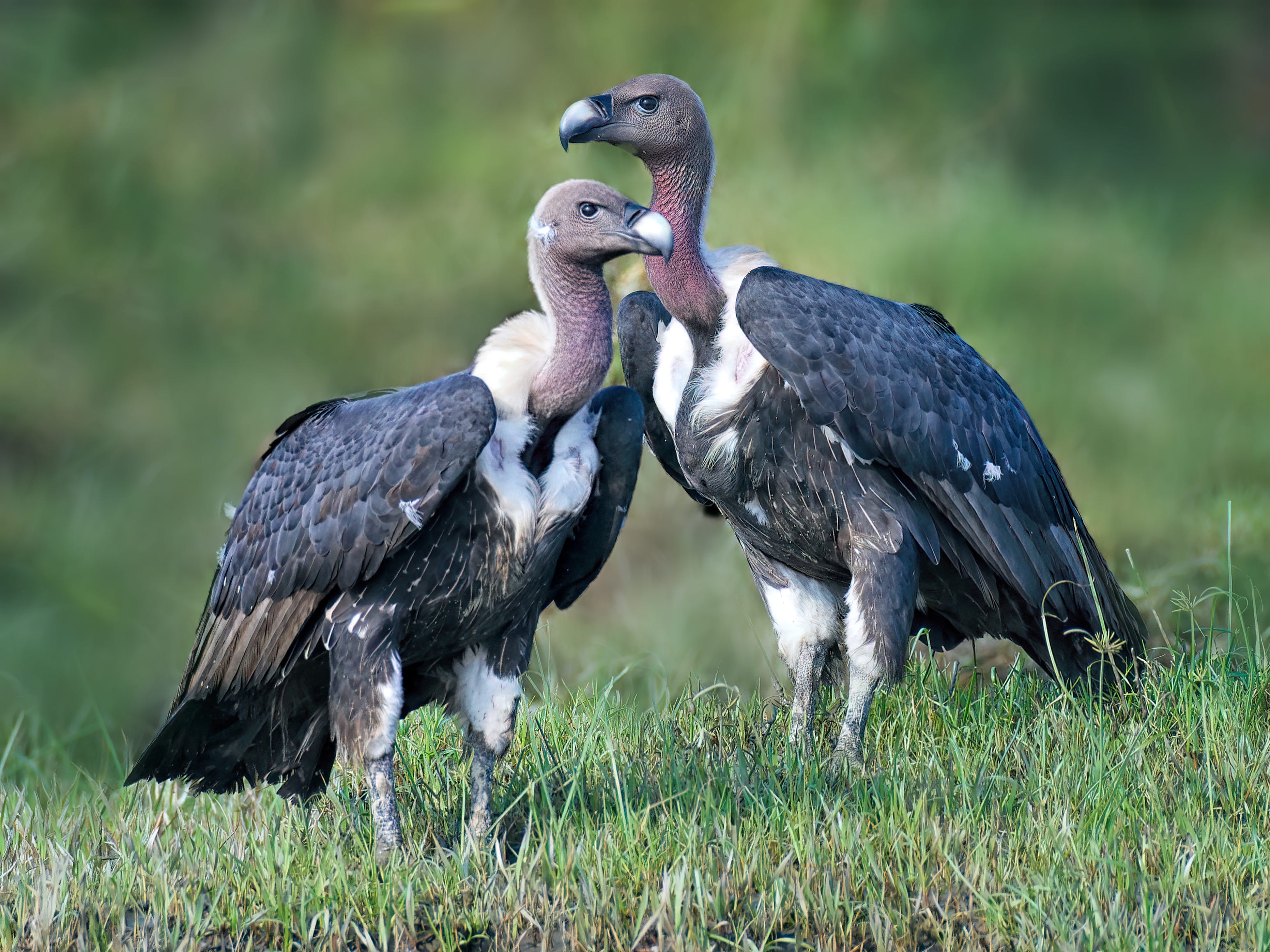
In November 2025, Gogabeel Lake in Bihar’s Katihar district was officially designated as India’s 94th Ramsar Site, expanding the country’s network of internationally recognized wetlands to nearly 13.6 lakh hectares. The freshwater oxbow lake, formed by the Ganga and Kosi rivers, supports over 110 waterbird species and serves as critical habitat for migratory birds including the critically endangered white-rumped vulture. The designation strengthens ecosystem services such as flood mitigation, water purification, and livelihood support for local communities.

India Reaffirms Climate Leadership at COP29
At the COP29 climate conference in Azerbaijan (November 6-8), India highlighted its remarkable climate progress: emission intensity of GDP reduced by 36% between 2005 and 2020, with non-fossil power now accounting for over 50% of installed capacity—reaching the revised NDC target five years ahead of schedule!
India has created an additional carbon sink of 2.29 billion tonnes of CO₂ equivalent between 2005 and 2021 through forest and tree cover expansion. India welcomed Brazil’s Tropical Forests Forever Facility (TFFF) initiative and joined as an Observer, reinforcing its commitment to global forest conservation.
Cold Desert Biosphere Reserve Joins UNESCO Network
In September 2025, India’s Cold Desert Biosphere Reserve in Himachal Pradesh was included in UNESCO’s World Network of Biosphere Reserves, bringing global recognition to this unique high-altitude ecosystem. India now ranks 9th globally in forest area and 3rd in annual forest gain according to FAO 2025 data, demonstrating the success of long-term conservation and sustainable development initiatives.
Economy & Infrastructure
India’s Electric Vehicle Market Doubles
India’s electric vehicle sector experienced explosive growth, with 119,332 electric cars registered between April-October 2025 (FY 2025-26)—surpassing the entire previous fiscal year’s total of 117,072 units. This represents a 105% year-on-year increase, with EV penetration in the passenger vehicle market reaching 4.6% compared to 2.1% in the same period last year.
Maharashtra led with 20,098 units, followed by Karnataka (12,660) and Kerala (11,672). Major launches are expected in late November, including the Tata Sierra EV (November 25) and Mahindra XEV 9S (November 27), which are poised to further accelerate adoption.
Pharmaceutical Sector Showcases Global Prowess
In a landmark breakthrough for India’s pharmaceutical industry, Cipla, Hetero Labs, Annora Pharma, and Natco Pharma won competitive bids to supply generic medicines in China. Hetero and Cipla secured contracts for the diabetes drug Dapagliflozin, while Annora Pharma won bids for Oxcarbazepine Tablets and Natco for Olaparib Tablets, according to the India-China Economic and Cultural Council.
India further reinforced its position as the “Pharmacy of the World” at the Qatar Medicare Exhibition 2025 (November 11-13), where the Embassy of India presented an Indian Pavilion highlighting pharmaceutical exports that reached USD 30.46 billion in FY 2024-25. The sector is projected to grow to USD 130 billion by 2030, driven by innovation, affordability, and quality-driven growth across pharmaceuticals, medical technology, and healthcare innovation.
Major Infrastructure Milestones
At the New Mangalore Port Authority, 16 infrastructure and 113 CSR projects worth ₹15 billion were inaugurated on November 13, boosting port capacity and community development.
The Delhi-Mumbai Expressway is approaching completion with 82% of the 1,386-km project finished as of November 2025. The Bharuch-Navsari stretch is set to open by end of November 2025, while the entire Delhi-Vadodara section is expected to be completed by December 2025. Once fully operational, the expressway will cut travel time between Delhi and Mumbai from 24 hours to just 12 hours, dramatically improving connectivity across six states.
Geopolitics & Defense
Defence PSUs Focus on Renewable Energy
Defence Minister Rajnath Singh reviewed the performance of Defence Public Sector Undertakings (PSUs) on November 7 and released “Swayam”—the first-ever comprehensive report on renewable energy and energy efficiency practices across all 16 defence undertakings. Over the past decade, defence undertakings have invested over ₹30,000 crore in research and development, with projected expenditure of approximately ₹32,000 crore over the next five years, doubling the pace of R&D.
Last week, India and Israel formally renewed and broadened their defence cooperation through a Memorandum of Understanding (MoU) signed in Tel Aviv, embedding technology-industry and innovation as core pillars. Defence Secretary Singh visited leading Israeli companies such as Elbit Systems and Rafael to explore joint production avenues, signalling India’s pivot toward co-development rather than simple acquisition.
Conclusion
As Week 46 draws to a close, India’s progress story continues to inspire confidence in a future powered by clean energy, cutting-edge technology, and deepening commitment to environmental stewardship.