

1. Innovation in Pharma
CSIR-NCL has rolled out India’s first pilot-scale continuous process technology for Paracetamol, enabling sustainable, cost-effective, zero‑effluent production that slashes import dependence for one of the country’s most used medicines. This isn’t just a clever process tweak; it’s a template for de‑risking India’s pharmaceutical supply chains while shrinking the pollution footprint of bulk drug manufacturing.
A fresh milestone in pharma R&D emerged as an indigenous nasal spray for migraine and acute pain, developed with CSIR support, moved closer to commercialization after successful clinical evaluation, promising faster onset of action and reduced systemic side effects compared to oral formulations. This kind of homegrown therapeutic innovation doesn’t just cut import bills; it positions Indian labs as creators of original dosage technologies for global markets.
2. Energy & The Green Transition
A recent hydropower transmission master plan highlighted by The Daily Brief estimates ₹1.91 lakh crore will go into phase‑one corridors by 2035, adding around 10,000 circuit‑km of new lines dedicated to flexible hydro.
The same report also underlined that roughly 40 transmission projects worth about 60 GW of renewable capacity in India still await connectivity approval, a bottleneck that simultaneously reveals the sheer scale of clean power already in the pipeline. This backlog isn’t a sign of failure; it’s a flashing neon indicator that India’s problem is no longer “too little clean energy” but “how fast can we plug in all this new clean capacity to the grid.”
3. Infrastructure, Agriculture & Economy
India’s economic diplomacy leapt forward as the country signed a Free Trade Agreement with New Zealand, marking a major step in strengthening bilateral economic ties across agrifood, services, and high-value manufacturing. This FTA matters because it opens premium markets for Indian produce and services while giving domestic consumers access to competitive imports, tightening India’s integration with Indo-Pacific trade flows.
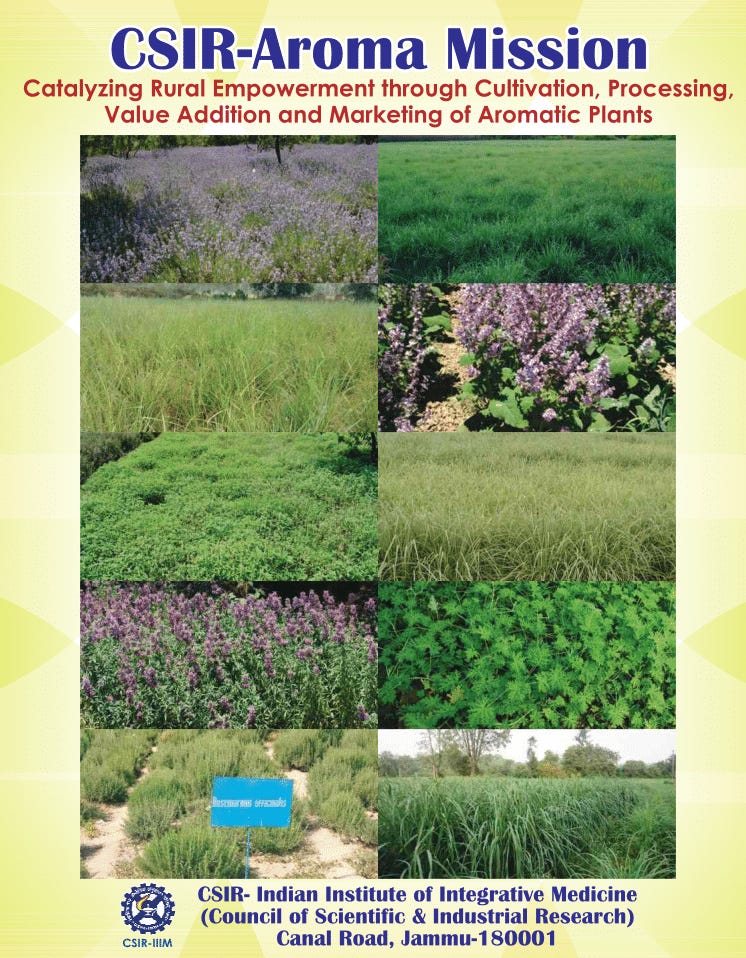
The CSIR Aroma Mission, recently honoured with the Rashtriya Vigyan Puraskar 2025 (Vigyan Team Award), has transformed aromatic crops into engines of rural prosperity across India, pushing farmers into higher-value markets built on science-backed varieties and distillation technologies. This mission matters because it turns R&D into directly monetizable crops, helping smallholders climb the value ladder instead of being stuck in low-margin commodity cycles.
4. Digital Public Infrastructure & Tech
The Daily Brief’s recent deep dive on 5G in India—spotlighted again in late December—notes that India rolled out one of the fastest 5G deployments in the world, yet is now entering a “slow revolution” phase where the real gains come from industrial use‑cases and new business models rather than raw coverage. This matters because the next wave of climate and productivity wins—like AI‑optimised grids, precision agriculture, and logistics platforms—depends on exactly this dense, reliable 5G warp‑and‑weft.

5. Biodiversity & Conservation (Flora/Fauna)
India’s conservation story this week is intensely governance‑heavy—but that is exactly how you secure wild futures for tigers, elephants, and cheetahs.
On 21 December 2025, the Union Environment Minister chaired the 28th meeting of the National Tiger Conservation Authority (NTCA) and the 22nd Steering Committee meeting of Project Elephant at Sundarbans Tiger Reserve, West Bengal, to review national strategies. The meetings confirmed that the sixth cycle of the All‑India Tiger Estimation has already started ground surveys (from November 2025) and reinforced science‑based, landscape‑level planning—exactly the kind of long‑horizon, data‑driven stewardship that keeps India the world’s tiger stronghold.
The elephant steering committee reviewed regional action plans, including the Nilgiri Elephant Reserve Model Conservation Plan, and took stock of an ongoing All‑India Synchronized Elephant Estimation plus DNA profiling of captive elephants. This is big because it upgrades elephants from “charismatic symbol” to rigorously tracked, genetically profiled populations—vital for managing corridors, reducing conflict, and keeping India a global leader in large‑mammal coexistence.
6. Defense
December’s defense-technologies news doesn’t shout “green” yet, but it shows a defense R&D ecosystem that is rapidly maturing autonomous systems and advanced propulsion—capabilities that will spill over into civilian sustainability hardware.
The December 2025 DRDO Newsletter reports successful field trials of a man‑portable autonomous underwater vehicle (AUV), proving out indigenous systems that can monitor harbours, offshore wind farms, and subsea cables without large, fuel‑hungry vessels. That is a dual‑use win: the same AUVs that secure India’s coasts can inspect underwater infrastructure for climate‑resilient logistics and energy.

India clocked more than 1,000 seconds of ground tests on an active‑cooled scramjet combustor and handing over technology for a miniature Stirling cryocooler. Those are deep‑tech bricks for high‑efficiency propulsion and ultra‑reliable cooling, both critical for future hypersonic transport, space instruments, and possibly next‑generation, ultra‑efficient cargo corridors.
7. ISRO and Space Tech
In mid‑December, ISRO Academia Day 2025 at ISRO HQ expanded academia–ISRO collaboration and released the RESPOND Basket 2025, a structured menu of research problems for Indian universities. That matters now because the projects selected under this basket will shape how India uses satellite data for agriculture, water management, climate resilience, and smart cities through the late 2020s.
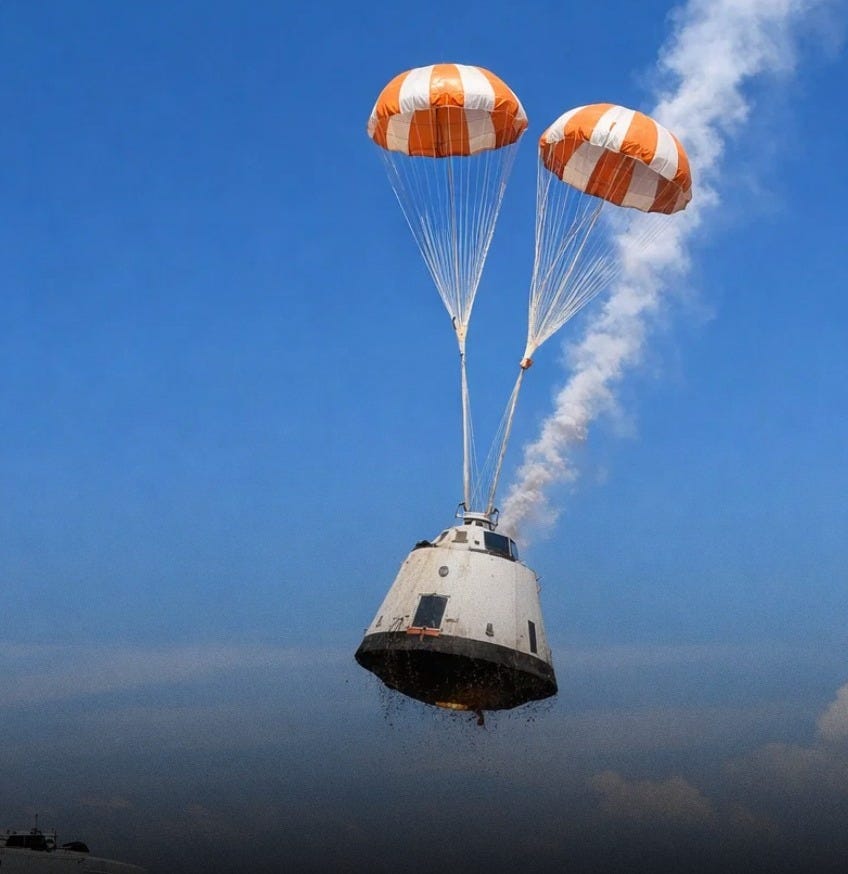
Last week, ISRO successfully conducted drogue parachute RTRS tests for the Gaganyaan crew module, validating a critical safety element for human spaceflight. This is not just a prestige mission: human‑rated systems demand extreme reliability, and the resulting innovations in materials, sensors, and systems engineering will cascade into everything from weather satellites to Earth‑observation constellations that track monsoons, crops, and coastal change with sharper eyes.
Quote of the Week
Sanskrit: विद्या ददाति विनयं, विनयाद् याति पात्रताम्। पात्रत्वात् धनमाप्नोति, धनात् धर्मं ततः सुखम्॥
English Traslit.:
Vidya dadati vinayam, vinayad yaati paathratham.
Paathrathvath dhanamaapnothi, dhanaath dharmam thatha-sukham.
English Translation:
Knowledge gives humility; from humility comes worthiness; from worthiness, wealth; from wealth, righteousness; and from righteousness, happiness.