

India’s energy storage capacity is projected to 10x this year, Mizoram finally gets its direct rail pulse, and ISRO invites you to do science in orbit.
The Storage Wave Is About to Break
Bondada Engineering’s Multi‑State Solar Blitz (and Storage!)
Hyderabad‑based Bondada Engineering quietly had a blockbuster January—and reported it this week. The company commissioned 69.51 MW of solar projects for three clients across Maharashtra and Tamil Nadu.
Locations: Hingoli, Achalpur, Bhusawal, Vajiapur in Maharashtra, and Neyveli in Tamil Nadu.
Clients include Maharashtra State Power Generation Company (MAHAGENCO) and NLC India [NSE: NLCINDIA].
Bondada also disclosed:
A planned 2 GW solar IPP portfolio in Andhra Pradesh with about ₹9,000 crore of investment.
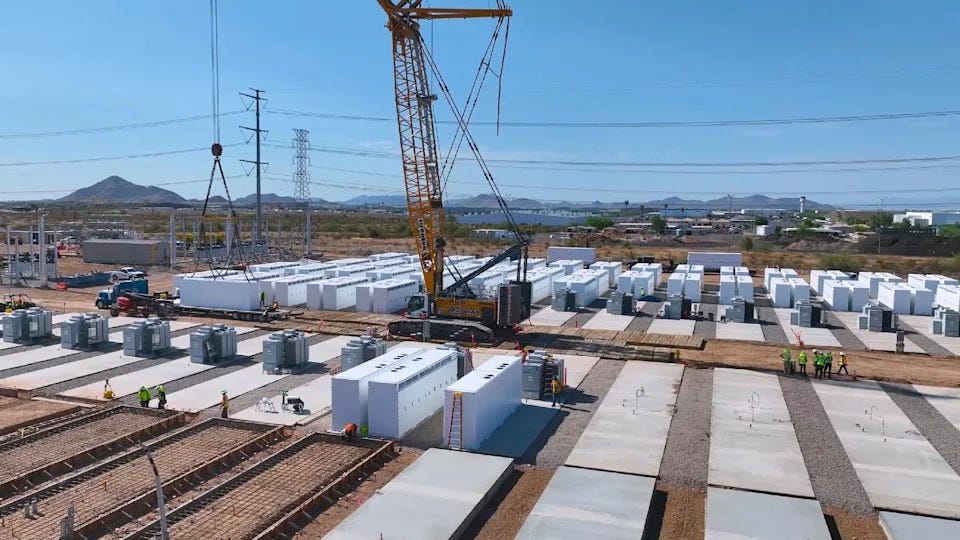
850 MWh of battery energy storage systems (BESS) already under execution, including a 200 MW/400 MWh project for Tamil Nadu’s utility and 225 MW/450 MWh for Andhra Pradesh’s transmission company.
So one mid‑cap listed company is simultaneously:
Building grid‑scale solar for state gencos,
Owning its own solar parks, and
Standing up nearly 1 GWh of storage.
All of this sits on top of a national storage surge. A recent market analysis by the India Energy Storage Alliance (IESA) pegs India’s BESS additions in 2025 at about 507 MWh—but projects a near ten‑fold jump to ~5 GWh in 2026 as projects move from tendering to commissioning!
One marquee example: an Adani‑led project in Gujarat is scheduled to commission a 1,126 MW / 3,530 MWh BESS installation in March 2026, one of the world’s largest single‑site systems.
This is the inflection point. For a decade, “renewables” meant GW‑scale solar parks with no firming. The stories above show India rapidly wiring in storage, firm power contracts, and IPP balance sheets. The green transition is no longer about adding gigawatts; it’s about re‑architecting the entire power system.
Everything points to India quickly becoming an Electrostate.
ISRO
ISRO just threw open a powerful new bridge between India’s labs and orbit with the IMEx‑2026 (Indian Microgravity Experiments) call, inviting Indian universities, national labs, startups, and industry to fly their own experiments in microgravity on upcoming human spaceflight platforms. This isn’t just a niche research scheme; it’s a direct pipeline for Indian materials science, biotech, and fluid dynamics ideas to be tested in space conditions that are impossible to replicate on Earth, accelerating everything from better pharmaceuticals to more efficient heat and mass transfer technologies.

In parallel, ISRO’s START 2026 training programme on “Observation from Space” is rallying Indian colleges to act as nodal centers for a three‑week national course on space science and technology, with student registration windows running through February 28, 2026. This is a stealth revolution in talent-building: thousands of young Indians will get hands-on exposure to satellite remote sensing, orbital mechanics, and space applications, seeding the human capital India needs for a long-term presence in space and data-driven climate and agriculture systems back on Earth.
If you want an insight into how ISRO helps the everyday Indian, I urge you to read February’s deep dive article:
From Saving Lives to Building Space Stations: The Sovereign Ambition of the New ISRO.

In case you missed it, click here to read Part 1 of this deep exploration of ISRO.
Infrastructure, Agriculture & Economy
Sairang–Silchar: Mizoram’s Rail Dream Finally Rolls
On 9 February 2026, Union Railway Minister Ashwini Vaishnaw virtually flagged off the first direct passenger train between Sairang in Mizoram and Silchar in Assam’s Barak Valley, two disconnected and remote corners of North East India.
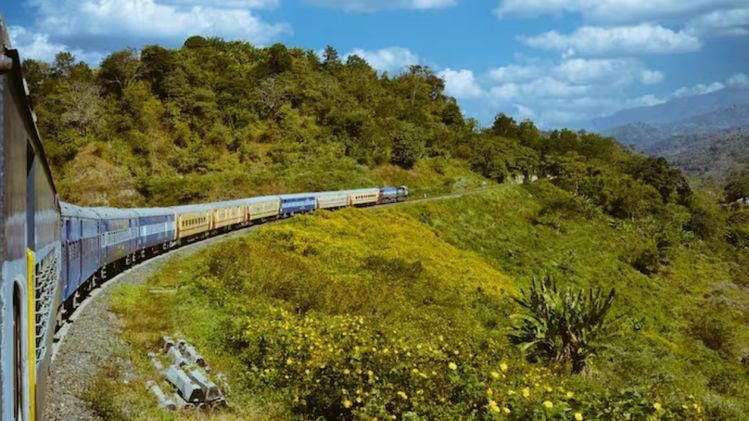
It’s the first ever direct rail link between the Barak Valley and Aizawl’s railhead at Sairang—piggybacking on the brand‑new 51.38 km Bairabi–Sairang railway line, inaugurated in 2025 after blasting through 45 tunnels and raising bridges taller than the Qutub Minar through extreme terrain.
Already being hailed as Mizoram’s gateway to the economy, here is why it matters:
Farmers in Mizoram can now move ginger, turmeric and other high‑value crops directly to Assam’s wholesale markets and onward rail corridors, cutting logistics time and cost sharply.
Patients and students get a safe, all‑weather alternative to landslide‑prone highways.
For the Barak Valley, long treated as a back‑of‑beyond logistics cul‑de‑sac, Sairang becomes a new economic gateway into the hills.
Northeast’s Aviation and Rail Hubs Converge
In parallel, Guwahati’s Lokpriya Gopinath Bordoloi International Airport is preparing to shift traffic into its new bamboo‑rich terminal by the end of February 2026.
Capex: about ₹5,000 crore across the airport development programme.
Design: inspired by Assam’s kopou phool and bamboo, using about 140 metric tonnes of locally sourced bamboo in the structure.
Capacity: built to handle over 13 million passengers per year by 2032, roughly double current throughput.
Between Sairang’s railhead and Guwahati’s next‑gen airport, the Northeast is finally acquiring the connectivity skeleton that its geography always demanded.

Biodiversity & Conservation (Flora/Fauna)
While this week’s headlines skew toward infrastructure and tech, India’s organic triumph at BIOFACH 2026 is at heart a biodiversity story: organic cultivation typically relies on richer crop rotations, reduced pesticide loads, and more biologically active soils, which support everything from earthworms to pollinators. As export momentum builds, Indian states that lean into organic clusters—especially in hilly and tribal regions—will not only capture higher price premiums, they’ll also lock in landscapes where farm income and ecosystem health grow together rather than pulling in opposite directions.


Defense
DRDO’s Ramjet Breakthrough Extends Indigenous Missile Reach
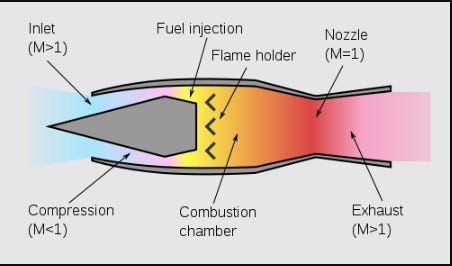
Just days before this roundup, DRDO conducted another successful test of its Solid Fuel Ducted Ramjet (SFDR) propulsion system for air‑to‑air missiles off the coast of Odisha. The February 2026 flight validated the full propulsion chain and guidance, clearing a major hurdle on the way to long‑range, high‑speed Indian air‑combat missiles.
Why it matters:
SFDR is the heart of next‑gen “no‑escape zone” missiles, giving Indian fighters the ability to engage targets at far longer ranges while maintaining maneuverability.
SFDR technology allows the missile to throttle its engine mid-air, a feat only a handful of nations have achieved.
Every SFDR milestone shrinks the space for imported propulsion systems and de‑risks future missile exports.
The implications of this successful test reverberate through a common vein in our defence‑tech story: India is steadily moving from “licensed user” to “original equipment manufacturer.”