

In case you missed it, click here to read Part 1 of this deep exploration of ISRO.
Chapter 4: The Invisible Backbone – Socio-Economic Impact
We have talked about rockets, orbits, and rupees. But the true measure of ISRO’s value lies in its impact on the everyday Indian. In a country where 60% of the population depends on agriculture and fisheries, ISRO functions as a critical socio-economic utility.
4.1 Fisheries: The ₹36,200 Crore Signal
Fishing in India is largely artisanal. Small boats, no sonar, high fuel costs. The difference between profit and loss is often the diesel burned searching for fish.
The Potential Fishing Zone (PFZ) Advisory:
ISRO satellites (Oceansat-3) monitor the ocean for two specific variables:
Sea Surface Temperature (SST): Thermal fronts often indicate upwelling, where nutrient-rich cold water rises.
Chlorophyll Concentration: Measured by the Ocean Color Monitor (OCM). High chlorophyll means high phytoplankton—fish food.
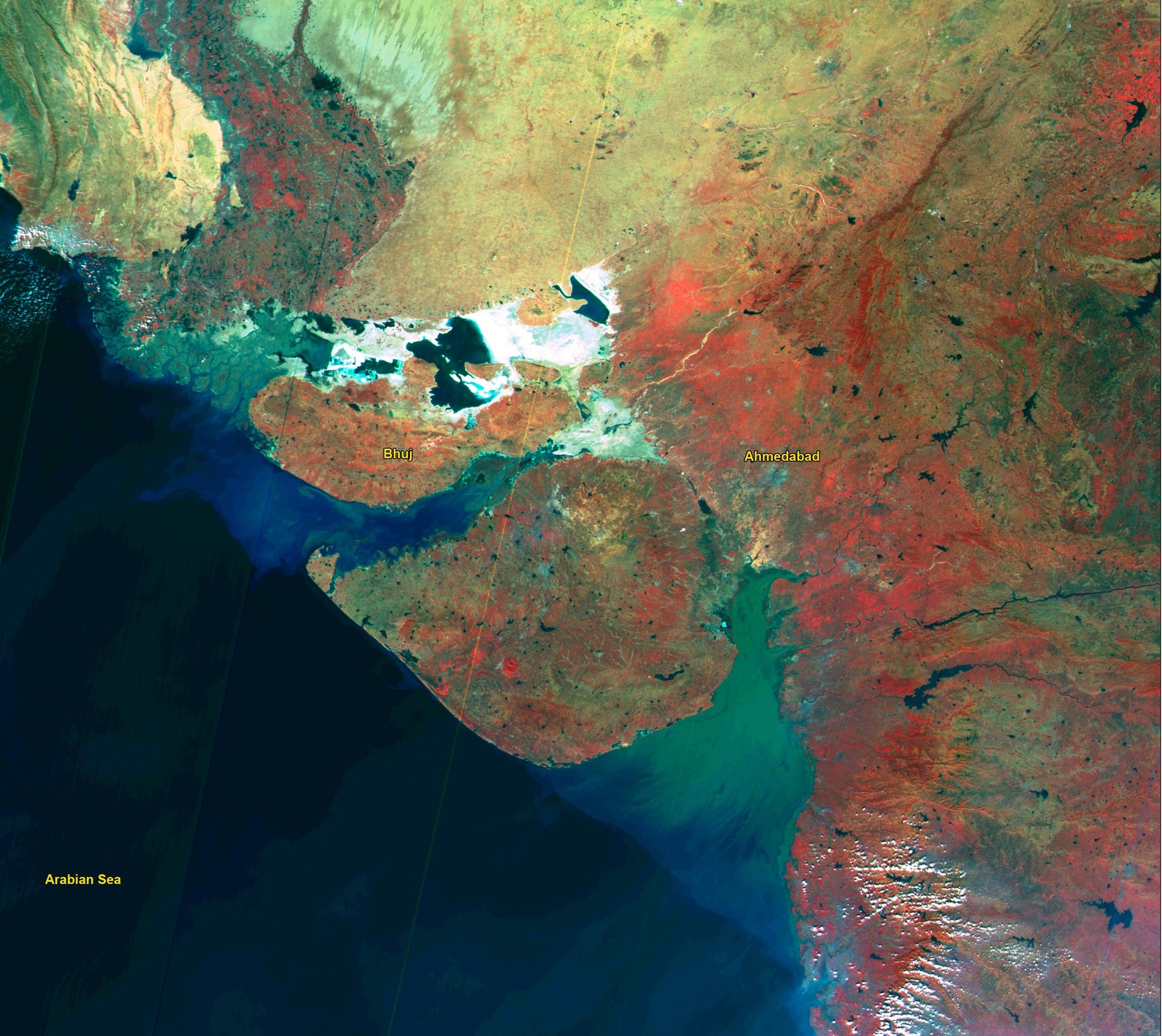
By overlaying these two maps, INCOIS (Indian National Centre for Ocean Information Services) identifies “Potential Fishing Zones” (PFZ)—areas where fish are mathematically likely to aggregate.23
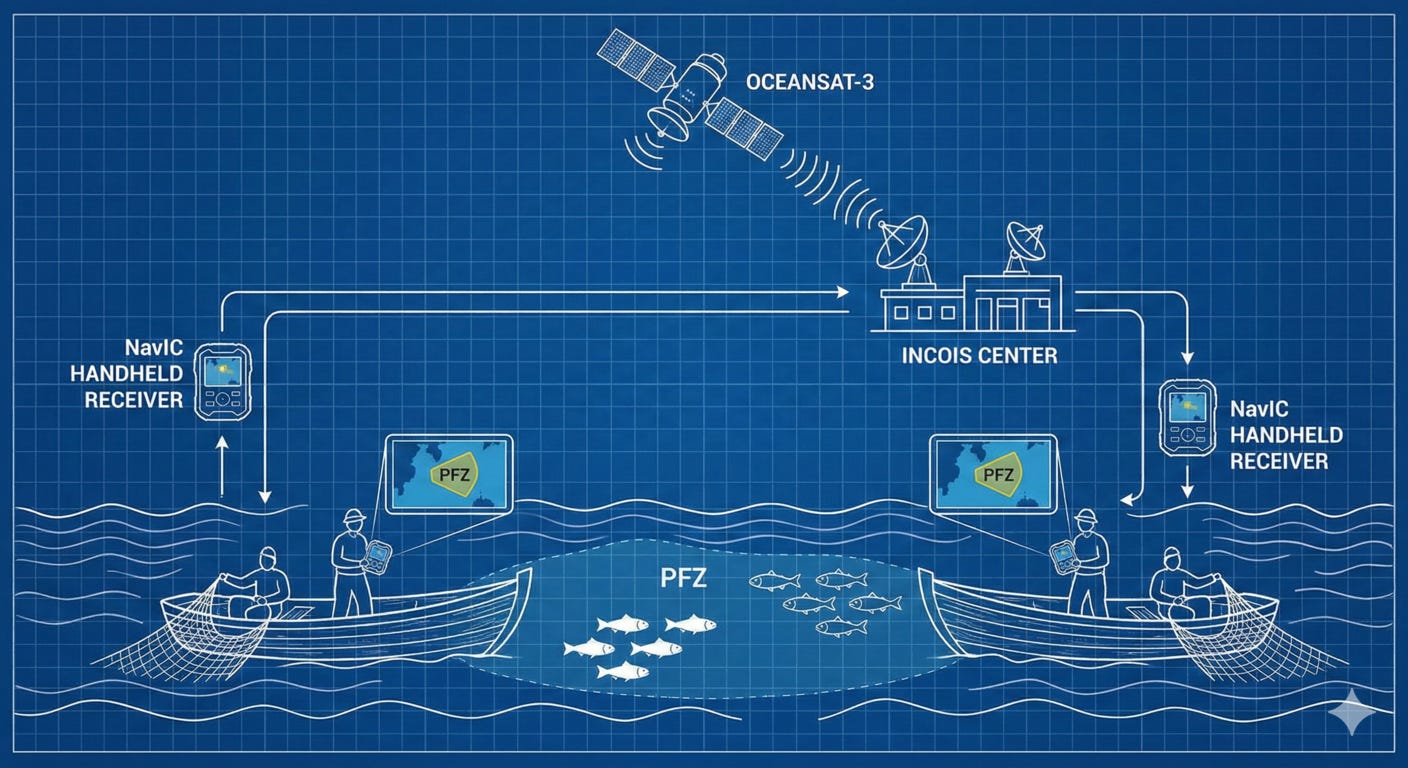
This data doesn’t sit on a server. It travels:
Satellite to Server: ISRO downlinks to INCOIS.
Server to Phone: Advisories are translated into local languages (Tamil, Telugu, Malayalam, Bengali).
Phone to Boat: Using NavIC receivers and Bluetooth bridging, the coordinates are displayed on the fisherman’s smartphone map, even 50 km offshore where there is no cell signal.23
The Economic Impact (2024-2025 Data):
Search Time: Reduced by 60-70%.
Fuel Savings: A mechanized boat saves ~130 liters of diesel per trip. At ₹95/liter, that is ₹12,350 saved per trip.24
The Annuity: Research estimates that the adoption of PFZ advisories contributes an economic value of ₹36,200 crore ($4.3 billion) over a 25-year lifecycle.25
Carbon Footprint: A cluster of 32 boats using PFZ data reduces CO2 emissions by 150,000 kg annually.26
This is how ISRO remains rooted in its service to the nation. It is not just about exploring the stars; it is about reducing the cost of making a living for a fishermen in the Indian Ocean.
4.2 Agriculture: Satellites as Insurers
Agriculture employs nearly half of India. But it is a gamble against the monsoon. The Pradhan Mantri Fasal Bima Yojana (PMFBY) is the government’s crop insurance scheme. Historically, settling agricultural insurance claims was a nightmare of paperwork and manual “crop cutting experiments” (CCEs)—literally sending an official to cut a patch of crop and weigh it. This was slow, prone to corruption, and inaccurate.
The Space Intervention:
In 2025, the PMFBY runs on satellite data.
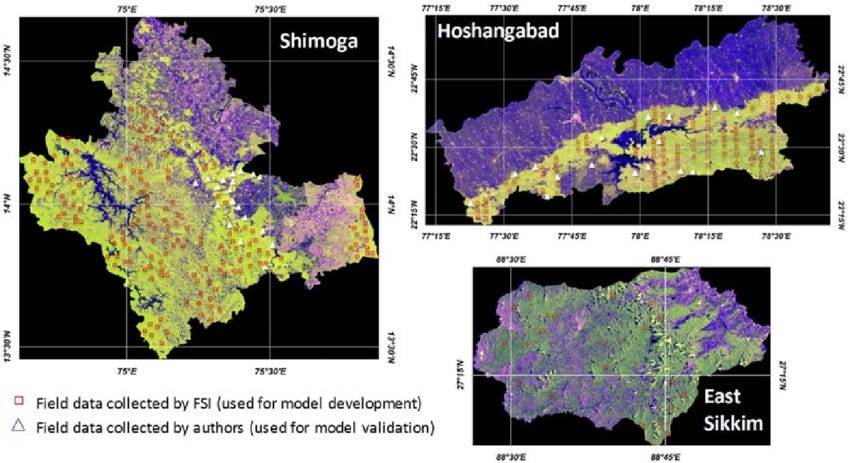
SAR Data: Satellites like RISAT-1A use Synthetic Aperture Radar (SAR). Unlike optical cameras, Radar sees through clouds. It can monitor crop health (biomass) even during the monsoon when the sky is overcast.27
YES-TECH: The “Yield Estimation System using Technology” uses this data to model exactly how much crop was lost in a specific village.28
The Result (2024-2025):
Claims Paid: In the 2024-25 period, claims worth ₹53,000 crore were settled.29
Speed: Settlements that took 6-9 months now happen in weeks.
Accuracy: The “Smart Sampling” technique uses satellite data to tell the ground official exactly which plot to cut for the most representative sample, reducing the workload by 30-40%.28
4.3 Disaster Management: The Zero Casualty Metric
The ultimate metric for any state agency is human life.
Cyclone Biparjoy (2023): ISRO’s INSAT-3D and Scatsat-1 provided such precise tracking that authorities evacuated 100,000 people from the Gujarat coast. The result was a “Zero Casualty” mission regarding direct storm impact.30
NISAR: The NASA-ISRO Synthetic Aperture Radar (NISAR) will take this to the next level. Its S-band radar (built by ISRO) is sensitive enough to detect ground deformation of a few millimeters. It will monitor the subsidence of Himalayan towns (like Joshimath) and the stability of glacial lakes, providing early warnings for landslides and flash floods.31
Chapter 5: Human Spaceflight & The Station – Gaganyaan and BAS
If the previous chapters were about the present, this chapter is about the leap into the future. The Gaganyaan program is India’s bid to become the fourth nation to launch humans into orbit. But in 2025, the goalposts moved. It is no longer just about a flight; it is about a Station.
5.1 Gaganyaan: The Final Countdown
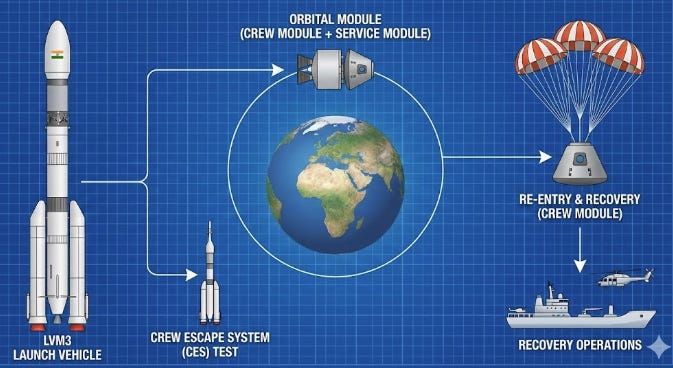
As of late 2025, the Gaganyaan project is 90% complete.33 The delays—primarily due to the COVID-19 hiatus and the extreme caution required for human-rating the LVM3—are largely resolved.
2025 Status:
Uncrewed Mission (G1): Scheduled for December 2025. This flight will carry “Vyommitra,” a humanoid robot designed to mimic human metabolic changes and test the Environmental Control and Life Support System (ECLSS).34
Parachutes: The Integrated Air Drop Test (IADT) successfully validated the cluster of parachutes required to slow the crew module from orbital speeds to a splashdown velocity of ~8.5 m/s.33
Crewed Launch (H1): Now targeted for 2027.36
5.2 Bharatiya Antariksh Station (BAS): Sovereign Real Estate
In September 2024, the Indian government approved the development of the Bharatiya Antariksh Station (BAS), expanding the Gaganyaan budget to ₹20,193 crore ($2.4 billion).36
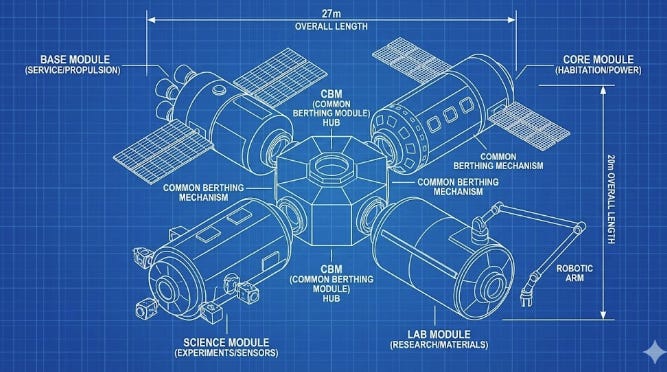
The Blueprint:
The BAS is not a monolith; it is a modular outpost.
Mass: ~52 Tonnes (Final configuration).38
Orbit: 400-450 km altitude, 51.5° inclination. This inclination is strategic—it covers most of the globe and is accessible from launch sites in the US, Russia, and French Guiana, promoting interoperability.38
Modules: 5 Modules total.
BAS-1 (Base Module): The first module, weighing ~10 tonnes. Launch targeted for 2028 using the LVM3.38
Science, Lab, and Universal Berthing Modules will follow.
Completion: Targeted for 2035.37
Strategic Significance:
Why a station? The ISS is aging. Russia is planning its own ROSS station. China has Tiangong. For India, BAS is about Strategic Autonomy. In the future lunar economy, access to Low Earth Orbit (LEO) will be the gatekeeper. A sovereign station ensures India is not a tenant in space, but a landlord. It provides a platform for microgravity research in pharma and materials that is owned by Indian scientists, not leased from foreign agencies.
Chapter 6: The Future Roadmap – Soorya and Beyond
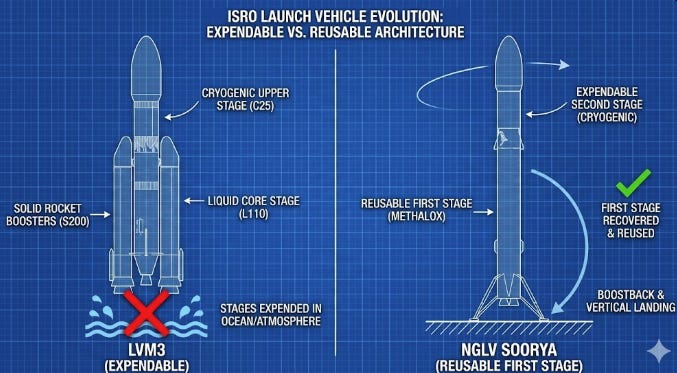
The final piece of the puzzle is the future launch architecture. The LVM3 is a reliable workhorse, but it is an old workhorse. It uses solid boosters (dirty, unthrottleable) and a hypergolic core (toxic). To compete in the 2030s, ISRO needs a clean, reusable, heavy lifter.
6.1 NGLV “Soorya”: The Methane Bet
The Next Generation Launch Vehicle (NGLV), named Soorya, is ISRO’s answer to Starship and New Glenn.
The Specs 39:
Configuration: 3-Stage Rocket.
Propulsion: Methalox (Liquid Methane + Liquid Oxygen).
Why Methane? It burns clean (no soot to clog reusable engines), has high efficiency (Specific Impulse), and can theoretically be synthesized on Mars.
First Stage: Reusable. It will use a cluster of 9 LME-110 (Liquid Methane Engine) engines and is designed to land vertically.39
Payload:
Expendable Mode: 30 tonnes to LEO (3x the LVM3 capacity).
Reusable Mode: ~15 tonnes to LEO.
Cost Target: $1,900 per kg.41 This would place it in direct competition with the Falcon 9’s current pricing.
Timeline:
Design completed in Jan 2025. First flight targeted for 2031.
6.2 Chandrayaan-4: The Return
Building on the “Hop” experiment (Chapter 1), Chandrayaan-4 is a sample return mission. It will launch on two separate rockets (LVM3 and PSLV), dock in lunar orbit, land, collect samples, and return them to Earth. This complex mission architecture is the rehearsal for a crewed lunar landing by 2040.42
6.3 Vision 2047: The Amrit Kaal of Space
The “Decadal Vision” released by IN-SPACe targets a $44 billion space economy by 2033 (up from $8 billion in 2024).43 This requires:
A 10-fold increase in launch cadence (driven by private players).
A sovereign station (BAS).
A heavy-lift reusable launcher (Soorya).
Conclusion: The Agency of Action
In the last two decades, the Indian Space Research Organisation has slowly shed its skin. It is no longer just the agency that “does more with less.” It is the agency that does everything.
It has successfully bifurcated its identity:
NSIL is the commercial predator, hunting for contracts in the global market and turning a healthy profit.
The Private Sector is the agile innovator, 3D printing engines and building carbon-fiber rockets at a pace the state cannot match.
ISRO Core is the visionary explorer, focusing on human spaceflight, space stations, and next-gen propulsion.
And grounding it all is the Socio-Economic Utility—the PFZ transponders on fishing boats, the radar satellites monitoring crop insurance claims, the cyclone warnings that save thousands of lives.
Unlike the space races of the past, this is not a race to a flag on the moon. It is a race to a sustainable, profitable, and strategically autonomous presence in the cosmos.